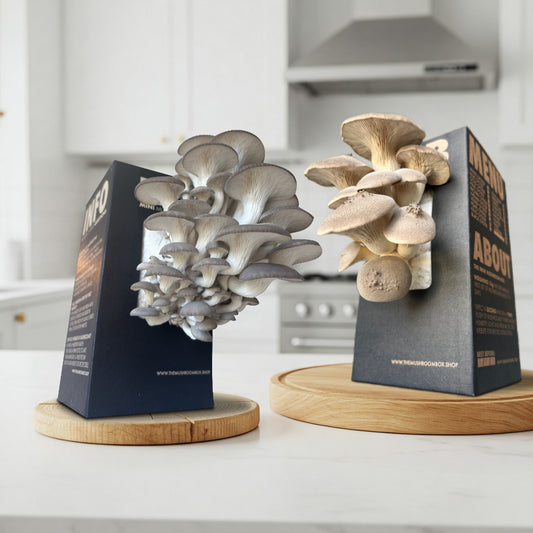
The Mushroom Box info:
Growth Phases
First day of growth
After cutting the opening, the mycelium can breathe fresh air, a signal to start growing mushrooms.
3rd day of growth
Your mushrooms will start to rappidly grow, once they're a bit larger than the middle image, you can harvest and eat them!
6-7th Day of growth
The rate of growth will depend on the temp/environment.
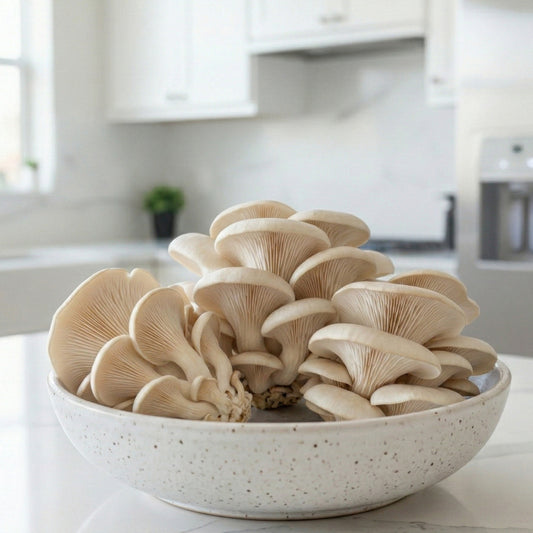
At this point, your mushroom is fully formed! We do not advise leaving it beyond this point because they will drop spores and break down quickly!
Harvest the whole cluster & allow 2-3 weeks for the next flush to start.
Storing
We do recommend using your boxes shortly after purchase for best results.
However, If you're not ready to use immediately, your grow Kit can be refrigerated for up to 6 months. (At your own risk)
Disclaimer: Pink & Gold oysters CANNOT be refrigerated because they're summer varieties. Keep them in a cool dark cupboard for best results.
Cooking
each mushroom unlocks unique medicinal culinary possibilities. To discover delicious dishes perfect for today's celebration, from smoky mushroom burgers to our incredible crumbed mushrooms with garlic sauce, explore our full collection of recipe resources and start your growing adventure!
DIY Mushroom Bucket
Turn 1 Box into a 10kg Farm!
Ready to level up?
Here's how it works:
Made for ambitious growers who're willing to put in a little extra effort for a massive reward.
This DIY kits are designed to show you how to transform a single 1.1kg Mushroom Box into a huge 10kg bucket farm, capable of producing an incredible 7-10kgs of fresh, gourmet mushrooms over two months!
What's included:
1x 10kg Bucket
A bag of chopped straw
Hydrated lime (for the recommended cold pasteurizing method)
1x fully colonized Mushroom Box of your choice
A sharp tool to punch holes in the bucket
(If using the hot water method, you will need a large metal pot and boiling water instead of lime)
If you've mastered our beginner boxes and are dreaming of bigger, more bountiful harvests, this is your next step.
Cost-Effective: This is the most economical way to produce a continuous supply of gourmet mushrooms.
The Ultimate Project: Experience the deep satisfaction of a larger-scale cultivation project from start to finish.
Continuous Harvest: Enjoy harvesting fresh mushrooms for up to two months straight.
Cautions and considerations
Eating Your Mushrooms:
Always cook your homegrown mushrooms well before eating.
When trying a new type of mushroom, eat just a small, cooked piece first to make sure you don't have an allergy.
About Mushroom Spores (A Fine Dust):
As mushrooms get bigger, they release a fine dust called spores. This is normal and how they make baby mushrooms.
This dust can sometimes make people cough or sneeze, especially if they have allergies.
To be safe, keep your mushroom kit in a room with good airflow, like near a window.
You can also pick your mushrooms when they are still young to have fewer spores in your home.
Health Benefits
The mushrooms you grow at home aren’t just fresher — they’re healthier and more powerful than anything you’ll find on a store shelf. Packed with plant-based protein, essential vitamins, minerals, and antioxidants, these exotic varieties help you:
Stay focused and clear-headed throughout the day
Build a resilient immune system that works with you year-round
Support a healthy gut and better digestion
Enjoy natural energy and vitality — without the crash
When you harvest straight from your Mushroom Box, you’re getting mushrooms at their peak nutrition and flavor — a rare combination of food and medicine that connects you back to nature.
The Mushroom box Instructions:
Your 1st Crop is Guaranteed to grow or get a replacement on us: Ts & cS below
We want you to grow with confidence, so we guarantee your first harvest!
To qualify, simply follow the included instructions on this page correctly and if you need assistance, fill out our growers guidance form below within 1 month from ordering your boxes.
If your mushrooms still don't grow, we'll send you a replacement on us. Simple as that!
Step 1: Finding the right spot
Think about where mushrooms grow naturally: in a forest, under the shade of trees, with access to fresh air, humidity, and subtle light, all while protected from wind.
Your kitchen counter or a spot on a shelf can work perfectly to recreate this environment.
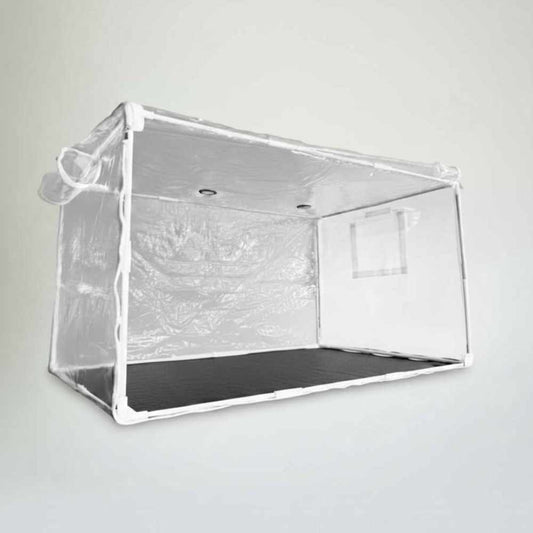
We also provide a mini mushroom farm setup which is designed to help you simulate that ideal forest environment anywhere.
Step 2: Setting Up Your Grow
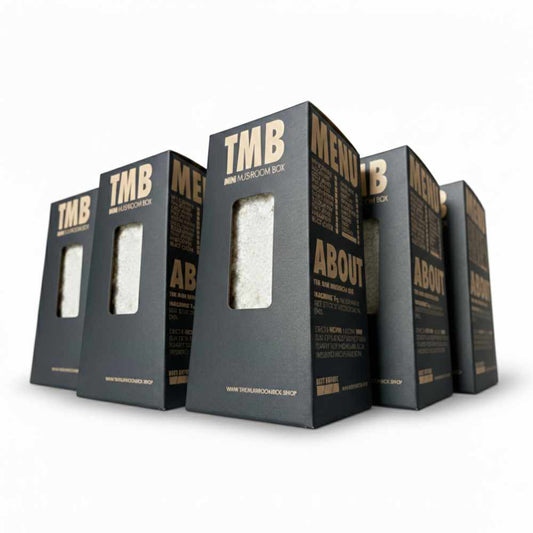
Cut Your Boxes: The first step is to cut the opening on the front of your mushroom boxes with a clean blade for your mushrooms to emerge.
They will breathe in fresh air which is a signal to start growing within the next 1-21 days.
Recommended: Arrange your boxes inside the grow tent & give the inside walls of the tent a good spray with water, and then zip the tent closed with the boxes inside until you can see the mini mushrooms popping through.
Step 3: The Growing Process
Now, we wait. It can take anywhere from 1 to 21 days for the first tiny mushrooms (we call them "pins") to emerge.
It's completely normal for different mushroom boxes to start growing at different times, so be patient!
Growth Spotted! What Now?
As soon as you see mushrooms visibly growing from your box, it's time for two important changes:
Fresh Air is Key: Open the front flap of your tent fully and keep it open, along with the side windows. Fresh air exchange is super important and allows your mushrooms to expand nicely. The tent should remain open for most of the growing time from this point on.
Turn on the Humidifier: Place the humidifier near your boxes and turn it on.
Make sure the humid air can flow out of the open tent—trapping all the humidity inside a zipped-up tent now will cause more damage than good.
Step 4: Harvesting Your Mushrooms
Once your mushrooms are at their peak, you must harvest them immediately. If you wait too long, they will start to release spores, which causes them to lose their delicious flavor and medicinal benefits. They can dry up within a matter of hours, so harvest on time!
To harvest, we recommend twisting and pulling the whole cluster off in one go.
Step 5: Allowing for another growth
Another set can grow from the same opening but we recommend taping up the initial hole, spinning the bag 180 degrees in your box & cutting a new opening for the next flush to begin.
After your first harvest, the mycelium needs some time to regain energy to grow again (roughly 1-21 days).
During this resting period, we recommend leaving your tent zipped up and keeping the humidifier off.
Once you see new mini mushrooms emerging, simply turn the humidifier back on, open the tent & windows for fresh air and watch the magic happen all over again.
This might be a good time to order a refill of mushroom boxes to keep your farm going.
Step 6: Planting the mycelium
When your mushroom box has given you all of its flushes and stops producing for more than 4 weeks, the journey isn't over.
Break up the spent mycelium block and bury it in your garden near a tree stump or under some wood mulch.
This will help enrich the soil for your plant life, and with a little luck, with enough moisture and shade, you might even see more mushrooms growing in your garden in the future. It’s the perfect way to complete the cycle and spread the mushroom magic.
Storing your boxes
Not ready to grow mushrooms right away?
You can store your mushroom box in a fridge for up to 6 months. (only works for the cool climate collection)
For the warm climate collection, a cold fridge will damage them. You can store them in a dark cupboard but keep an eye on them as they may find a way to grow on their own.
Common Mistakes
Mold Contamination
Usually caused by:
1: Overwatering
Stagnant water on your mushrooms, without enough fresh air to evaporate it may cause contamination.
2. Cutting the opening with a dirty blade
Always clean your blade when cutting the opening. If you have multiple boxes, clean it between cutting the opening on different boxes to avoid cross contamination.
3. Unsanitary environment.
Mold nearby can potentially land on your mushroom box and start competing with the mycelium inside.
4. End of mycelium's lifecycle
Mold can appear when the mycelium has weakened after producing all the mushrooms it can.
Here’s What to do
If you see mold growing on your mushroom box. it’s important to act quickly.
We recommend posting an image on our growers group. If its too far along, our team may advise moving directly to Step 5 to help address the issue before it spreads.
Choosing a
Sporulation is the natural way mushrooms reproduce. When a mushroom is fully mature (past its peak for eating), it releases a fine, dust-like powder called spores to spread its genes. Think of it like a flower releasing pollen.
While this is a normal and fascinating part of the mushroom lifecycle, it's something we advise avoiding with your homegrown kits to get the best experience.
Why You Should Harvest Before Spores Drop
Harvesting your mushrooms at the right moment is the secret to a perfect harvest. Here are three key reasons why you should always pick them just before they release their spores:
For the Best Flavour & Benefits: A mushroom's taste, nutritional value, and medicinal properties are at their highest right before sporulation. After spores drop, the mushroom quickly loses its quality and delicious flavour.
For More Future Harvests: Releasing spores signals to the mycelium that its job is done. By harvesting early, you encourage the mycelium to produce more flushes, giving you more mushrooms from your box.
For Less Mess & Irritation: The spore dust can create a big mess around your kit. In large amounts, this fine powder can also cause respiratory irritation for some people.
How to Know When to Harvest
So, how do you know the perfect time? The rule is simple: harvest your mushrooms when they're still young and growing.
A great guide is to harvest when the mushroom cluster is roughly the size of a closed fist, or just as the caps begin to flatten out (before the edges start to curl upwards).
The "moral" of the story: a timely harvest leads to tastier mushrooms and more future harvests!
Sporulation
Sporulation is the natural way mushrooms reproduce. When a mushroom is fully mature (past its peak for eating), it releases a fine, dust-like powder called spores to spread its genes. Think of it like a flower releasing pollen.
While this is a normal and fascinating part of the mushroom lifecycle, it's something we advise avoiding with your homegrown kits to get the best experience.
Why You Should Harvest Before Spores Drop
Harvesting your mushrooms at the right moment is the secret to a perfect harvest. Here are three key reasons why you should always pick them just before they release their spores:
For the Best Flavour & Benefits: A mushroom's taste, nutritional value, and medicinal properties are at their highest right before sporulation. After spores drop, the mushroom quickly loses its quality and delicious flavour.
For More Future Harvests: Releasing spores signals to the mycelium that its job is done. By harvesting early, you encourage the mycelium to produce more flushes, giving you more mushrooms from your box.
For Less Mess & Irritation: The spore dust can create a big mess around your kit. In large amounts, this fine powder can also cause respiratory irritation for some people.
How to Know When to Harvest
So, how do you know the perfect time? The rule is simple: harvest your mushrooms when they're still young and growing.
A great guide is to harvest when the mushroom cluster is roughly the size of a closed fist, or just as the caps begin to flatten out (before the edges start to curl upwards).
The "moral" of the story: a timely harvest leads to tastier mushrooms and more future harvests!